Strong Curves program guide and free spreadsheet
Beginner · 3 days a week · 12 weeks per program in the book · Glute-focused full-body training with hip thrusts and bridges first
A glute specialization program for women: full-body training three or four days a week, with hip thrusts and glute bridges first in every session.
Free. The spreadsheet needs no account.
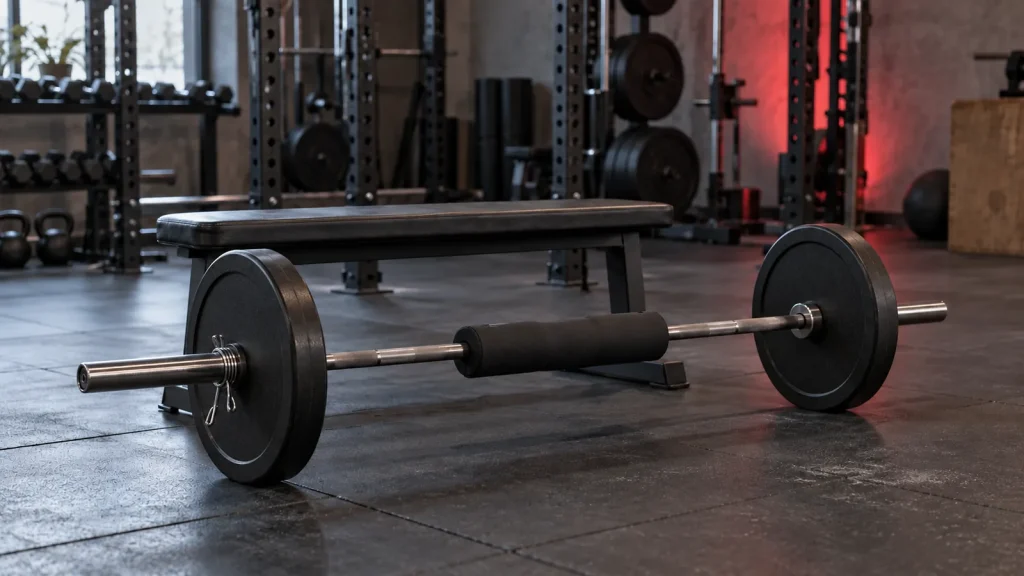
How Strong Curves works
Strong Curves is a 2013 book by Bret Contreras and Kellie Davis, published by Victory Belt with the subtitle A Woman's Guide to Building a Better Butt and Body. Victory Belt lists a nutrition guide and over 200 strength exercises in it. The book is paid, and this page summarizes its structure in our own words.
Breaking Muscle's review counts four 12-week programs in the book: Booty-ful Beginnings for beginners, Gluteal Goddess for advanced lifters, Best Butt Bodyweight for training at home, and Gorgeous Glutes, which trains the lower body only. Each one splits into weeks 1 to 4, 5 to 8 and 9 to 12. The main programs run three or four full-body workouts a week, labelled A, B and C, and you repeat Workout A when you train a fourth day.
The glutes come first. Contreras popularized the barbell hip thrust in 2006, and his own site says he made it a primary glute exercise in Strong Curves. Liftosaur's write-up of the beginner program says each workout opens with a glute-dominant movement. Breaking Muscle lists eight slots in order: a glute-dominant lift, a pull, a quad-dominant lift, a press, a hip or hamstring lift, a glute accessory and two core exercises.
Liftosaur describes the beginner program in more detail. Weeks 1 to 4 are mostly bodyweight, weeks 5 to 8 mix in equipment, and weeks 9 to 12 move to the barbell. A fourth day, Workout A again, starts at week 5. Lower-body lifts sit at about 10 to 20 reps for 3 sets, upper-body lifts at about 8 to 12, and core work gets one set or a timed hold. Pairs of exercises run as supersets to keep sessions short.
Our in-app version is a representative glute-focused week of our own, not the book's workouts. Day 1 is hip thrust, goblet squat, dumbbell row and dumbbell bench press. Day 2 is barbell glute bridge, Romanian deadlift, lat pulldown and dumbbell shoulder press, plus single-leg glute bridges. Day 3 is hip thrust, step-ups, seated cable row, incline dumbbell press and cable glute kickbacks, plus back extensions. We picked the lifts and set counts inside the rep ranges Liftosaur reports. The bodyweight bridges and back extensions are in the app but not the sheet, because they have no weight to enter.
Which one to pick: choose Strong Curves if your glutes are the main goal and you want hip thrusts and bridges at the front of every session. Choose our Strength training program for women if you want general strength on the squat, bench press and deadlift with no body-part focus. Choose the Full body workout routine if you want barbell squats, bench press and deadlifts spread over a heavy, a medium and a volume day.
The exercise lists, phase changes, warm-up drills and nutrition guide live in the book. Buy Strong Curves for the full method.
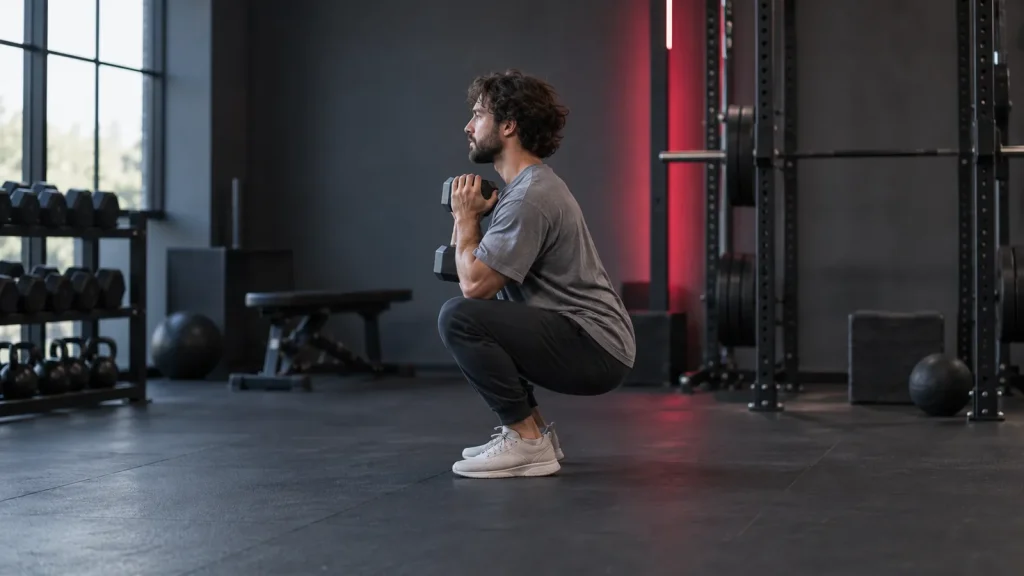
The schedule
Train on Monday, Wednesday, Friday, or any other days with rest between. Every set uses the same weight, the one you can lift for the written reps.
Day 1: Hip thrust
| Lift | Sets and reps |
|---|---|
| Barbell hip thrust | 3 x 10 |
| Goblet squat | 3 x 12 |
| Dumbbell row | 3 x 10 |
| Dumbbell bench press | 3 x 10 |
Day 2: Glute bridge
| Lift | Sets and reps |
|---|---|
| Barbell glute bridge | 3 x 12 |
| Romanian deadlift | 3 x 10 |
| Lat pulldown | 3 x 10 |
| Dumbbell shoulder press | 3 x 10 |
Day 3: Hip thrust and step-up
| Lift | Sets and reps |
|---|---|
| Barbell hip thrust | 3 x 10 |
| Dumbbell step-up (each leg) | 3 x 10 |
| Seated cable row | 3 x 10 |
| Incline dumbbell press | 3 x 10 |
| Cable glute kickback (each leg) | 2 x 15 |
Progression and stall rules
Add reps, then weight
Liftosaur reports that the book asks you to beat your last reps or weight each session and to add weight once the top of the rep range gets easy. Liftosaur's own version runs that as double progression: add reps each session, and when every set reaches the top of the range, add 5 lb and drop back to the bottom. The sheet adds 5 lb (2.5 kg) each session, so read it as the fastest pace and hold a weight until your reps catch up.
Clean reps beat more reps
Liftosaur quotes Contreras saying he would rather see five good reps than twenty sloppy ones. Stop a set when your hips stop reaching full lockout or your lower back takes over.
Phases carry the program
In the book the exercises get harder every four weeks. Liftosaur describes the beginner program moving from bodyweight work in weeks 1 to 4 to mixed equipment in weeks 5 to 8 and barbell work in weeks 9 to 12. Our in-app week does not change by phase, so buy the book for those changes.
Stall rule
If a lift misses its reps for 2 to 3 sessions in a row, drop it by about 10% and build back up. That rule is our own default, not one from the book.
Weekly volume
Work sets per lift, counted from the schedule above (warm-ups not included).
| Lift | Sets per week |
|---|---|
| Barbell hip thrust | 6 |
| Goblet squat | 3 |
| Dumbbell row | 3 |
| Dumbbell bench press | 3 |
| Barbell glute bridge | 3 |
| Romanian deadlift | 3 |
| Lat pulldown | 3 |
| Dumbbell shoulder press | 3 |
| Dumbbell step-up (each leg) | 3 |
| Seated cable row | 3 |
| Incline dumbbell press | 3 |
| Cable glute kickback (each leg) | 2 |
Who it suits
A good fit
- Women whose main goal is bigger, stronger glutes, with the rest of the body trained too.
- Beginners who want a plan that starts with mostly bodyweight work and builds up to the barbell.
- Lifters who can train three or four days a week and like short sessions with supersets.
Look elsewhere if
- Lifters chasing a bigger squat, bench press or deadlift total. A strength program built on those lifts fits better.
- People who want even work across every muscle. Liftosaur notes the beginner program has no hamstring isolation, no lateral or rear delt work and limited quad volume.
- Anyone who wants the full workouts without buying the book. This page is a summary.
Common mistakes
Turning it into hip thrusts only
The main programs are full body. Keep the pulls and presses in every session, even when the hip thrust is the lift you care about.
Loading the bar before the lockout is clean
Add load only when you reach full hip extension at the top of every rep. If your lower back arches to finish the rep, the bar is too heavy.
Adding weight every session
Liftosaur's summary of the book says to add weight once the top of the rep range gets easy. Hold the weight until every set reaches the top of the range.
Starting with the advanced program
Breaking Muscle's review lists Gluteal Goddess for advanced lifters, and Liftosaur names it the next step after Booty-ful Beginnings, with four days a week and heavier loads. If you are new to training, start with Booty-ful Beginnings.
Your sample week
For each lift, enter: Weight you use for your working sets. The weights below update as you type. Your numbers stay in your browser and are not saved. The numbers shown are an example lifter.
Day 1: Hip thrust
| Set | Reps | Weight (lb) |
|---|---|---|
| 1 | 10 | 135 |
| 2 | 10 | 135 |
| 3 | 10 | 135 |
| Set | Reps | Weight (lb) |
|---|---|---|
| 1 | 12 | 35 |
| 2 | 12 | 35 |
| 3 | 12 | 35 |
| Set | Reps | Weight (lb) |
|---|---|---|
| 1 | 10 | 30 |
| 2 | 10 | 30 |
| 3 | 10 | 30 |
| Set | Reps | Weight (lb) |
|---|---|---|
| 1 | 10 | 25 |
| 2 | 10 | 25 |
| 3 | 10 | 25 |
Day 2: Glute bridge
| Set | Reps | Weight (lb) |
|---|---|---|
| 1 | 12 | 115 |
| 2 | 12 | 115 |
| 3 | 12 | 115 |
| Set | Reps | Weight (lb) |
|---|---|---|
| 1 | 10 | 95 |
| 2 | 10 | 95 |
| 3 | 10 | 95 |
| Set | Reps | Weight (lb) |
|---|---|---|
| 1 | 10 | 70 |
| 2 | 10 | 70 |
| 3 | 10 | 70 |
| Set | Reps | Weight (lb) |
|---|---|---|
| 1 | 10 | 15 |
| 2 | 10 | 15 |
| 3 | 10 | 15 |
Day 3: Hip thrust and step-up
| Set | Reps | Weight (lb) |
|---|---|---|
| 1 | 10 | 135 |
| 2 | 10 | 135 |
| 3 | 10 | 135 |
| Set | Reps | Weight (lb) |
|---|---|---|
| 1 | 10 | 15 |
| 2 | 10 | 15 |
| 3 | 10 | 15 |
| Set | Reps | Weight (lb) |
|---|---|---|
| 1 | 10 | 70 |
| 2 | 10 | 70 |
| 3 | 10 | 70 |
| Set | Reps | Weight (lb) |
|---|---|---|
| 1 | 10 | 20 |
| 2 | 10 | 20 |
| 3 | 10 | 20 |
| Set | Reps | Weight (lb) |
|---|---|---|
| 1 | 15 | 15 |
| 2 | 15 | 15 |
The spreadsheet
The file has three sheets: your numbers, the full week with every weight as a formula, and a progress table that carries the weights forward. It opens in Excel, Numbers and LibreOffice. The weights in the link below use the numbers you typed above.
Open it in Google Sheets
- Download the .xlsx file above.
- Go to Google Drive and choose New, then File upload, and pick the file.
- Double-click the uploaded file and choose Open with Google Sheets.
- Choose File, then Save as Google Sheets so you can edit it.
Want the weights to follow you into the gym? Create a free account and the program loads into Train for you.
How it compares
Strong Curves vs Strength training program for women
Our women's guide is general strength: squat, bench press, deadlift and rows, with no body-part focus. Strong Curves is a glute specialization that puts hip thrusts and bridges first. Pick the women's guide for all-round strength, Strong Curves if your glutes are the priority. Read the Strength training program for women guide.
Strong Curves vs Full body workout routine
Also three full-body days a week, built on barbell squats, bench press and deadlifts across a heavy, a medium and a volume day. Pick it for overall barbell strength, Strong Curves if glute growth comes first. Read the Full body workout routine guide.
Strong Curves vs Dumbbell full body workout
Uses dumbbells and a bench only, with no glute focus. Pick it if you train with limited equipment and want balanced work; pick Strong Curves if you have a barbell for hip thrusts. Read the Dumbbell full body workout guide.
Load Strong Curves into Train and log each session against the plan.
Start it in Symmetric StrengthThe workouts in Train are our own glute-focused week, built on the structure public write-ups describe. They are not the workouts from the book, they keep one rep count per lift, and they do not change by phase. Buy Strong Curves for the real programs.
Common questions
What is Strong Curves?
A glute-focused training book for women by Bret Contreras and Kellie Davis, published in 2013. It holds four 12-week programs, a nutrition guide and over 200 exercises.
How many days a week is Strong Curves?
Three or four. The main programs use three full-body workouts, A, B and C, and you repeat Workout A on a fourth day if you have time. Liftosaur places that fourth day from week 5 in the beginner program.
How long is the Strong Curves program?
Each program runs 12 weeks in three blocks of four. In the beginner program, Liftosaur describes the exercises getting harder at weeks 5 and 9.
Is Strong Curves free?
No. Strong Curves is a paid book from Victory Belt. This guide and the spreadsheet are free, but they cover our own representative week, not the book's workouts.
Is Strong Curves good for beginners?
Yes. Breaking Muscle's review describes Booty-ful Beginnings as the program for beginners, and Liftosaur says it starts with bodyweight exercises before adding equipment.
How do I pick starting weights for Strong Curves?
Liftosaur reports that the book has you find a 10-rep max for each exercise: a weight you can lift ten times with clean form but not eleven. Enter that weight in the sheet, and start lighter if you are unsure.
Can men do Strong Curves?
Yes. The book is written for women, as its subtitle says, but Liftosaur's write-up says anyone can use the training, because hip thrusts, bridges and steady loading build the glutes and hamstrings in any lifter.
Do the in-app templates match the book?
No. Start-it loads our own three-day glute-focused week with hip thrusts and bridges first. Use the book for the real workouts and phases.
Know where you stand
Before you start, check how your lifts compare on the strength standards, estimate a max with the one-rep max calculator, or score your total with the DOTS calculator.
Sources and credit
Strong Curves was written by Bret Contreras and Kellie Davis and published by Victory Belt. The book is paid. This guide summarizes its publicly described structure in our own words, drawing on Victory Belt, Breaking Muscle, Liftosaur and Bret Contreras's site. Buy the book for the full programs. The in-app templates are our own simplified week.
- Official Strong Curves source
- Book review: Strong Curves by Bret Contreras and Kellie Davis (Breaking Muscle)
- Strong Curves workout program, beginner program (Liftosaur)
- Hip thrust wiki page (Bret Contreras)
Checked . Symmetric Strength is not affiliated with Bret Contreras, Kellie Davis, Strong Curves, Victory Belt, Liftosaur or Breaking Muscle. Program names are used only to identify the programs.