Guided curriculum
Strength Training Guides
Ten practical guides that turn strength data into better training decisions.
Start with the basics
Basics
Understanding Strength Standards
Strength standards put your lifts in context by relating performance to bodyweight and a named reference method. Symmetric Strength offers a Strength Score model, a separate lift-ratio reference, and optional cohort comparisons. Knowing which comparison you are reading helps you interpret the result and compare future checks fairly.
In this guide
What strength standards measure
A 100 kg bench press means something very different for a 60 kg lifter than for a 120 kg lifter. Strength standards account for this by scoring lifts relative to bodyweight, with separate expectations for male and female lifters. This bodyweight-relative approach lets lifters of any size measure progress on the same scale.
On Symmetric Strength, every lift you enter receives a score built from these standards, and those per-lift scores feed the overall analysis, the classification, and the symmetry score.
The classification ladder
The public standards hub displays eight benchmark levels from Untrained to World class; scores under 30 show as Subpar. These are thresholds in the model, not measured population percentiles. A classification alone does not tell you what percentage of people you outperform or whether you are ready for competition.
A level does not measure years of training or predict when you will reach the next one. The separate lift detail pages use six bodyweight-ratio levels from Beginner to Elite. Similar labels in different methods need not give the same result, so compare like with like.
How your overall score is built
Your overall score combines the scored movement patterns you enter: squat, floor pull, horizontal press, vertical press, and pulling. A single-pattern result is valid for that entered pattern; it cannot describe whole-body balance. Add another scored pattern before drawing conclusions about relative strengths.
This design rewards complete development. Two lifters with the same best squat can end up with very different overall scores depending on how well their other patterns keep pace.
Using standards productively
Standards are a measuring tool, not a verdict. Comparing yourself with elite athletes is rarely useful; they represent a tiny fraction of lifters, often with many years of specialized training behind them.
Keep the performed weight, repetitions, bodyweight, lift setup and reference method alongside each result. Before interpreting a changed classification as progress, check whether those inputs or the method changed. A saved benchmark gives you a starting point for that comparison without promising a particular rate of improvement.
Compare these concepts against Symmetric Strength standards: strength standards hub, squat standards, bench press standards, deadlift standards and overhead press standards.
Basics
Why Symmetry Matters
Symmetry compares the estimated scores of the movement patterns you entered. Two lifters can share an overall score while showing different gaps between their squat, pulling and pressing patterns. This comparison can help you review your training, but it needs at least two scored patterns to say anything about balance.
In this guide
What the symmetry score tells you
The comparison looks at differences between scored movement patterns. A small gap means those entered patterns are closer within this model; it does not prove that every muscle is equally strong. A missing lift provides no evidence about that pattern and should not be treated as a zero-strength result.
A symmetry result is not an injury-risk estimate, a diagnosis or an assessment of movement quality. The muscle diagram also shows estimates derived from lifts rather than direct measurements of individual muscles. Use the numbers to frame questions about your training, not to establish medical conclusions.
Common imbalance patterns
A bench press and overhead press can fall in different model bands, as can a squat and deadlift. These are examples of comparisons you can inspect, not evidence that a particular pattern of imbalance is common in all lifters or that one lift caused another to lag.
Differences may reflect exercise selection, experience with a movement, technique, the dates of the recorded sets or the reference method. Check those explanations before deciding that the smallest score needs extra training. The scores alone do not identify a cause.
How to read the weak-point analysis
The analysis compares the available pattern scores and can identify a relative gap when there is enough comparable evidence. Smart Coach may instead explain that it needs more evidence. That is a useful result: a single lift or uncertain comparison should not produce a confident corrective prescription.
Read any suggested focus with its explanation and your own program in mind. A model gap is one input to a training decision, alongside your goal, exercise practice and recent workload. It is not proof that the suggested change will make you stronger.
Training for better balance
If a relative gap matches your training goal, use it as a point to review within your existing program. You do not need to change every lift to make the chart look even. Keep the exercise definitions and comparison conditions consistent when assessing whether a gap has changed.
Return with comparable performed sets and inspect what changed in the underlying weight and repetitions as well as the score. Adding a previously missing pattern can change the picture without any loss of strength. Save the context so a later review remains understandable.
Use lift-specific standards to check the movement patterns discussed here: squat standards, deadlift standards, bench press standards and overhead press standards.
Training
Progressive Overload
Progressive overload means increasing an appropriate training demand over time as your current work becomes manageable. The change might be more load, repetitions or sets, or better execution through the intended range of motion. It is a direction for a program, not a rule that every exercise must improve in every session.
In this guide
Why overload drives adaptation
Resistance training improves the qualities it repeatedly challenges. Once a planned workload is consistently comfortable, a measured increase can provide a new challenge. The useful increase is one you can complete with the range of motion, control and effort target your program defines.
More is not automatically better. A sudden increase in load, volume and frequency at the same time makes the result hard to interpret and may exceed what you can recover from. Change one main variable, record it and use the following sessions to judge the response.
Linear progression for beginners
Some new lifters can add a small amount of weight frequently while they learn a movement, but adding weight every session is not a universal beginner requirement. Exercise difficulty, available plate sizes, sleep, prior activity and practice all affect the pace.
Use the smallest practical increase after you complete the planned work with repeatable execution. If the next load causes missed repetitions, repeat it or return to the last completed load instead of treating one session as a verdict. Persistent misses call for a review of the progression rule, workload and recovery.
Progress slows as you advance
Progress rarely follows a fixed daily, weekly and monthly ladder. Performance varies, and a stronger lifter often needs more exposures before a small improvement is clear. Compare several sessions performed with the same exercise setup instead of declaring a plateau from one difficult day.
When a trend has truly stalled, inspect the record before adding complexity. Check whether the exercise, range of motion, repetitions, bodyweight or calculation method changed; then review workload, recovery and exercise practice in the context of the goal.
More ways to progress than adding weight
Weight on the bar is only one lever. A program may progress repetitions within a range, add a set, change weekly exposure or ask for the same work with more repetitions in reserve. A more consistent range of motion can also make later comparisons more meaningful, even when the load does not rise.
Match the lever to the outcome. Shorter rests may change conditioning and reduce the load you can perform; extra sets raise volume; heavier loads emphasize force production. Record the variable you changed so apparent progress is not just a different test.
Training
Recovery Fundamentals
Training and recovery have to fit together. Sleep, adequate food and a workload you can repeat influence whether a program remains productive. There is no single recovery schedule for every lifter, so use general guidance as a starting point and adjust it from repeated performance and wellbeing signals.
In this guide
Sleep is the foundation
The American Academy of Sleep Medicine and Sleep Research Society recommend that adults sleep seven or more hours per night regularly for health. Individual need varies, and duration is only one part of healthy sleep alongside quality, timing and regularity.
Treat a pattern of short or disrupted sleep as context for training, not as a score that predicts a lift. If sleep problems persist or affect daily function, a healthcare professional is a better source than a training calculator.
Eat to support your training
For healthy exercising adults, the International Society of Sports Nutrition identifies about 1.4 to 2.0 grams of protein per kilogram of bodyweight per day, roughly 0.64 to 0.91 grams per pound, as sufficient for most people. Needs can differ with age, health, total energy intake and training goals.
Total food intake also has to match the goal. A calorie deficit, maintenance phase and gaining phase create different constraints, so interpret training performance alongside bodyweight and nutrition rather than assuming every slowdown comes from the program. Individual medical or dietary needs belong with a qualified clinician or dietitian.
Space out the hard sessions
A fixed 48-to-72-hour rule cannot account for exercise choice, volume, effort or the individual lifter. General health guidance supports training all major muscle groups regularly, while sport-focused programs distribute harder and easier exposures according to their specific demands.
Judge spacing by whether you can perform the next planned session with acceptable execution and effort. Light activity on a non-lifting day can be compatible with recovery, but it is optional and should not be presented as a treatment for soreness or pain.
Watch total life stress
Work, illness, travel and sleep disruption can change what training is practical. During an unusually demanding period, reducing the planned workload can be reasonable if it helps you keep the important work repeatable.
Warm-up performance, recent completed work, sleep, soreness and motivation are imperfect signals. Look for a pattern across several of them instead of letting one number decide the session. Persistent pain, illness or an unusual loss of function needs appropriate professional assessment rather than a harder workout or an automatic deload.
Safety
Technique Over Ego
Useful technique is repeatable and appropriate for the exercise, the lifter and the goal. A consistent setup and defined range of motion make training easier to compare over time. No single form is perfect for every body, and technique alone cannot guarantee that an injury will not occur.
In this guide
Why technique comes first
Define what a successful repetition means before judging it. A powerlifting competition lift follows its federation rulebook, while a training variation may deliberately use a different stance, tempo or range. Those are different tasks rather than one universal standard of perfect form.
Heavier loads can change how a repetition looks, so use a load that lets you practice the intended movement. Technique feedback can improve consistency and sport performance, but a video or score cannot diagnose the cause of pain or estimate injury risk.
Audit your own lifting
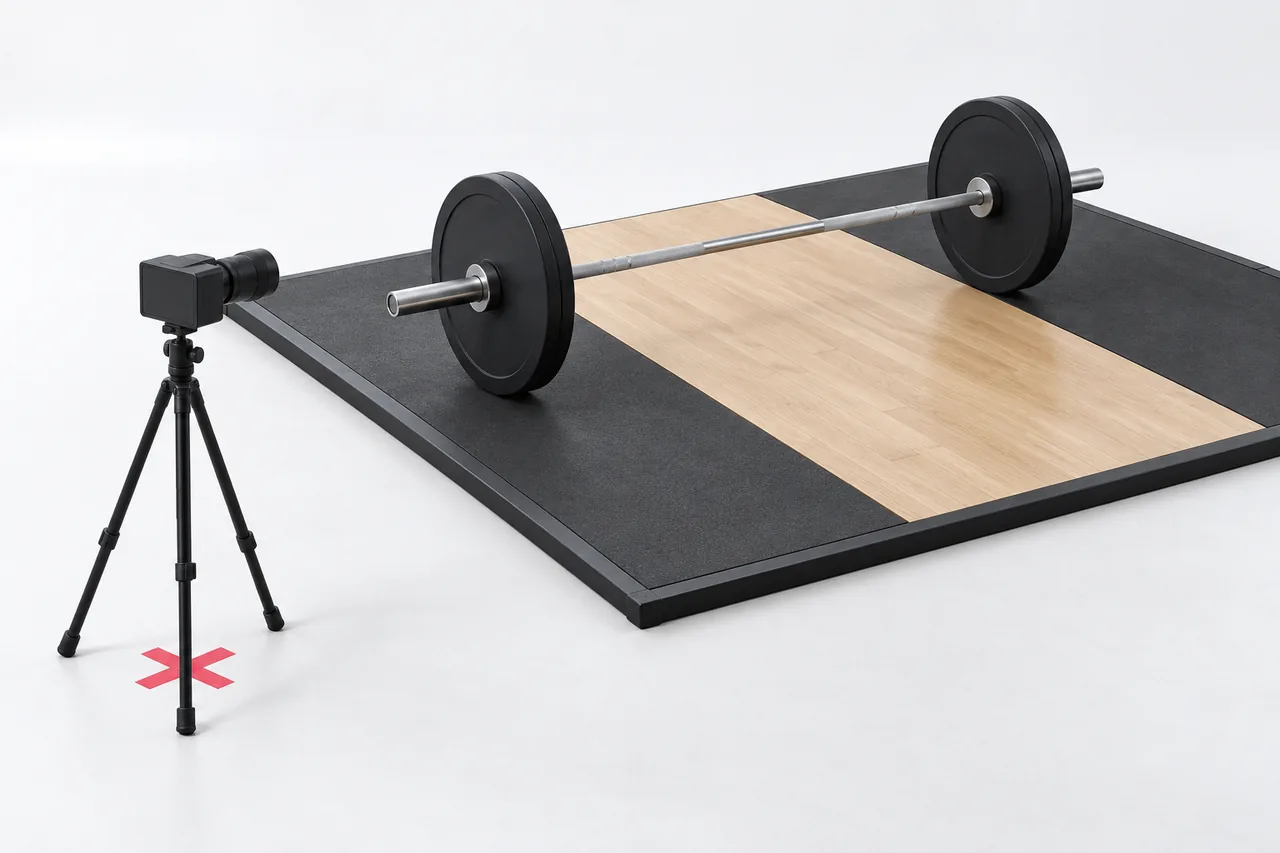
Video can help you compare repetitions that felt different. Use a stable camera position that shows the joints and bar path relevant to the question, and keep the angle similar across sessions. A single angle can hide important details, so describe what the video can and cannot show.
Review representative warm-up and work sets, not only a personal-record attempt. Compare setup, range of motion and the point where execution changes as effort rises. Keep the performed load and repetitions with the clip so the comparison has context.
Get qualified eyes on your lifts
For sport technique, look for a coach who understands your event, relevant rulebook and training history. Ask which observation supports a cue and how you will tell whether the change helped. Online comments can offer ideas, but they do not establish a reviewer's qualifications or see the full context.
A cue that helps one lifter may not help another. Test a small number of changes with manageable loads and compare the result. Pain, numbness, sudden weakness or symptoms outside normal training fatigue call for an appropriately qualified healthcare professional.
Leave reps in reserve
The 2026 ACSM position stand reports that training to momentary failure does not consistently improve outcomes for the average healthy adult. That does not make one fixed RPE range mandatory: proximity to failure can vary by exercise, goal, experience and phase of training.
RPE and repetitions in reserve are estimates, especially for unfamiliar lifters. Record the estimate, the completed repetitions and any change in execution. Stop a set at the boundary your program defines rather than turning every set into an unplanned maximum.
Training
Choosing a Program
Choose a program by its match to your goal, schedule, equipment, current capacity and preferred exercises. Training age can provide context, but it does not by itself decide the right frequency or progression. A useful program tells you what to do, how to progress and what to change when the planned work is missed.
In this guide
Beginners: simple and frequent
A new lifter usually benefits from a short exercise list, repeated practice and clear instructions for adding load or repetitions. The 2026 ACSM guidance for healthy adults emphasizes regular training of all major muscle groups; a strength-sport plan then adds the practice needed for its specific lifts.
Pick a schedule you can repeat. Two, three and four-day structures can all be reasonable depending on the exercises and workload. Before adding accessories, make sure you understand the main lifts, the progression rule and what counts as a completed session.
When simple progression stalls
One missed increase does not prove that a lifter needs a more complex program. Confirm the stall across comparable sessions, then check exercise setup, increment size, sleep, nutrition and whether the current workload still fits the goal.
A program can respond by slowing the increase, using a repetition range, distributing hard and easier sessions or changing volume. Complex periodization is one option, not an automatic upgrade, and the 2026 ACSM review found that it did not consistently change outcomes for the average healthy adult.
Advanced: individualized structure
A competitive or highly trained lifter may need a plan built around event rules, a competition date, recent workload and the small changes that still matter. Calendar-based blocks and variation can organize that work, but their value depends on the athlete and the problem they solve.
When the margin for error is small, a qualified sport coach can help interpret the record and coordinate training decisions. Ask for the reason behind each change and the evidence you will use to evaluate it rather than treating complexity as proof of expertise.
Adherence beats optimization
Consistency is central to the 2026 ACSM guidance, but adherence does not make a mismatched plan effective. The plan must also provide enough appropriate training, fit the goal and remain tolerable and safe for the person using it.
Before starting, define the review point and the evidence you will keep: completed sessions, performed loads and repetitions, effort notes and any changes to exercise setup. Review the pattern after a meaningful run of sessions, while changing course sooner if the plan is clearly unworkable or symptoms need professional attention.
Competition
Your First Competition
Many local powerlifting meets accept first-time lifters without a qualifying total, while some divisions and higher-level events have eligibility requirements. Start with the exact event listing and its current federation rules. A first meet can give training a date and a clear sport-specific test, but the experience differs by event.
In this guide
Pick a federation and register early
USA Powerlifting, the United States Powerlifting Association and Powerlifting America are distinct organizations. Do not treat their names, affiliations or rules as interchangeable. Find a suitable event, then read the rulebook and event information linked by that organizer before registering.
Check membership, anti-doping, division, qualifying and equipment requirements. Approved belts, sleeves, singlets, footwear and even technical lift criteria can differ or change. When the event notice and rulebook appear to conflict, ask the organizer or federation for the controlling answer.
Practice the rules before meet day
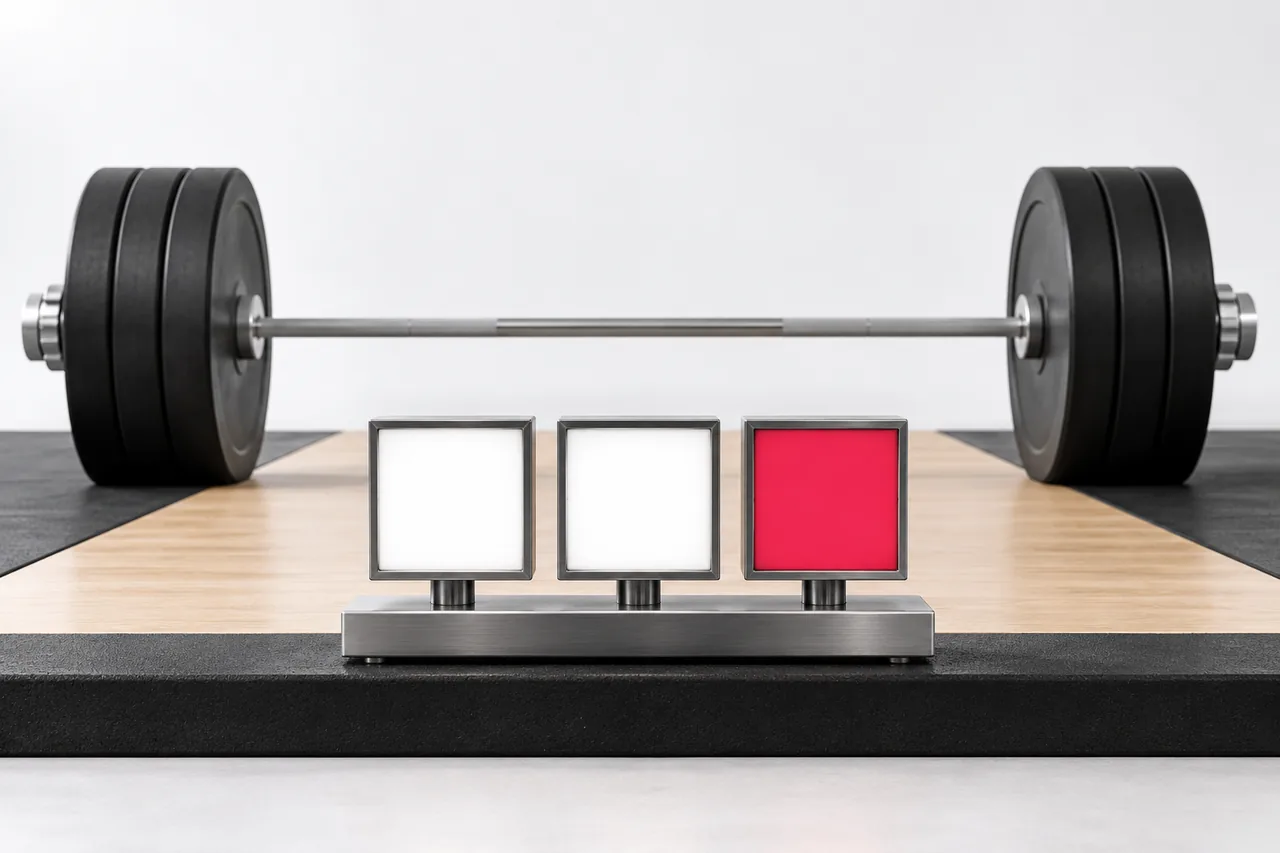
Competition lifts are judged against the selected federation's technical rules and referee commands. Squat depth, bench position and pause requirements, deadlift completion and the order of rack or down commands must be learned from that current rulebook rather than from a generic checklist.
Practice the exact commands and required positions with manageable weights before meet day. Ask a referee or experienced coach from that federation when wording or interpretation is unclear. A gym personal record is not automatically a valid competition lift.
Plan your attempts conservatively
Full power events generally provide three attempts for each lift, subject to the federation and event rules. There is no universal opener percentage. Choose a first attempt you can perform confidently to the required standard after the event warm-up and within the allowed increments.
Plan possible second and third attempts in advance, then adjust them to the result and speed of the preceding attempt. Know the deadline and procedure for submitting the next number. A valid total requires at least one accepted attempt in each contested lift.
What meet day looks like
Use the organizer's schedule for check-in, equipment inspection, weigh-in and lifting flights; timing differs between federations and events. Confirm what food, drinks, warm-up equipment and support people the venue allows, and arrive with rack heights and opening attempts prepared when required.
For a first meet, use process goals you control: arrive prepared, follow commands, submit attempts on time and record what you learn. Nine accepted lifts is a possible perfect card, not a requirement for a worthwhile day. Review the official results before treating any lift or total as final.
Review the competition-lift standards before choosing attempts: squat standards, bench press standards and deadlift standards.
Recovery
When to Deload
A deload is a temporary reduction in training stress. Coaches and lifters use deloads in different ways, but research has not established one best schedule or shown that every lifter needs a planned easy week. Treat a deload as an adjustable programming tool rather than a guaranteed route to better performance.
In this guide
What the evidence can support
Reducing sets, load or effort reduces the work performed for a short period. That can fit a program when recent training has become hard to repeat, but the size and timing of any benefit depend on the preceding workload and the individual response.
Direct research is limited. In one small randomized study, a week with no resistance training during a nine-week program did not improve muscle growth, power or endurance compared with continuous training and produced less lower-body strength improvement. That result does not test every reduced-training deload, but it rules out promising a universal benefit.
Signs you may need a deload
Use a pattern of comparable-session performance, completed workload, effort, sleep and motivation as context. One poor session or one soreness rating cannot tell you whether a deload is needed, and a plateau may reflect progression design, technique, nutrition or changed testing conditions.
Pain is not a deload indicator that a general guide can diagnose. Sudden or persistent pain, swelling, numbness, illness or loss of normal function calls for an appropriately qualified healthcare professional and may require stopping or changing training.
Ways to structure a deload
A deload can reduce sets, load, proximity to failure, exercise difficulty or some combination. Complete rest is a different intervention from continuing the lifts with less work, so evidence about one should not be presented as proof for the other.
Start from the program's written rule if it has one. Otherwise, identify which source of stress you intend to reduce and preserve only the practice that serves a clear purpose. Record the change so you can judge the following sessions instead of relying only on how the week felt.
Choose timing from the program and evidence
Fixed four-to-eight-week deload schedules describe common practice, not a proven requirement. A preplanned deload can fit the end of a demanding block or the calendar before a competition; an autoregulated approach can respond to a sustained performance and workload pattern.
Afterward, compare the next sessions with the same exercises and conditions. If performance, motivation or tolerance does not improve, reconsider the training load and the reason for the deload rather than repeating it automatically.
A well-designed program also includes ordinary easier sessions and rest. Needing recovery does not prove that training must stop for a full week, and a deload should not be used to train through an injury or illness.
Basics
How Strength Standards Are Calculated
Symmetric Strength uses more than one reference method. The public standards hub shows the eight benchmark levels of the Strength Score model, while individual lift pages show the six-level lift-ratio reference. Optional cohort comparisons are separate again. Check the method beside the result before interpreting a level, target or percentile.
In this guide
The classification ladder
The hub converts Strength Score thresholds into expected lift weights using the selected sex, bodyweight, age and repetition range. It shows eight benchmark levels from Untrained to World class; scores under 30 show as Subpar. The full assessment uses this Strength Score model too; a single-pattern result does not establish balance across patterns.
Individual lift detail pages use Beginner, Novice, Intermediate, Proficient, Advanced and Elite ratio bands. They are lift-specific reference thresholds, not the same scale as the hub. A label shared by the two methods is not a promise of an identical classification.
Thresholds differ by lift
The lift-ratio reference has separate thresholds for the fourteen registered lifts, with movement-category sex multipliers and fixed age adjustment bands. Its bodyweight tables use the midpoint of each labeled range. Read those details before comparing a row with an assessment using your exact bodyweight.
For an entered set, the benchmark estimates a one-rep maximum with the Wathan formula and applies the selected rounding. A tested maximum and a formula estimate are different kinds of evidence. Another calculator can give a different answer because it uses another formula, rounding rule or reference population.
What the next-level target means
A next-level target is a calculation within the reference method shown beside it. In a ratio-based snapshot it is the estimated one-rep maximum needed to reach the next ratio threshold at the stated bodyweight. In the Strength Score model it follows the score thresholds. Neither target sets a training deadline.
Bodyweight is part of the formula, so a small change in bodyweight shifts the ratio and can move the target. Weighing yourself consistently and using the same lift and technique when you compare makes the number more meaningful.
Where aggregate numbers come from
Saved assessment record counts provide context about available records; they are not counts of unique lifters or confidence estimates for the model. Where a separate cohort percentile is available, read its stated population and eligibility limits. An unavailable percentile must not be replaced with an assumed population rank.
Neither the Strength Score levels nor the six-level lift-ratio bands establish a measured percentile of all lifters. Keep the method and your original inputs with a saved result, so changes in bodyweight, rounding or reference version are not mistaken for changes in performed strength.
Basics
What Your Lift Numbers Mean
A lift number means the most when it is compared with your own bodyweight. A 300 lb bench press is a different achievement at 150 lb than at 250 lb, and the standards hub exists to make that comparison directly. This guide walks through how to read your numbers and what to do with the result.
In this guide
Start with an estimated one-rep max
Use the one-rep-max calculator or your logged training data to estimate your one-rep max for a lift. The estimate is a formula output rather than a tested maximum, so treat it as a planning number, not a claim about what you can lift on any given day.
For consistency, use the same lift setup and range of motion each time you compare, because the estimate is only as reliable as the input you give it.
Compare the ratio, not the weight
For a ratio comparison, open the individual lift detail page from the standards hub and read its six-level reference and method notes. The hub itself shows the separate Strength Score ladder. Use the same method for later checks rather than comparing labels across the two scales.
Because the ladder is relative to bodyweight, two lifters with very different bodyweights can both be Intermediate in a lift. That is the intended behavior of the comparison, not an error.
Read the level as a reference, not a verdict
The levels describe where your ratio sits on a reference ladder. They do not judge your effort, training history, or potential, and they should not be used to compare lifters of different bodyweights or sexes directly.
The next-level target is simply the estimated weight you would need at your current bodyweight to reach the next threshold. It is a marker of distance, not a deadline.
Use the comparison to choose direction
Save the result with its performed set and bodyweight, then review it alongside your other scored patterns and training goal. A gap to the next label is not, by itself, evidence of the best exercise to prioritize. Add comparable lift evidence before expecting a balance conclusion or Coach recommendation.
Retest the same lifts on a consistent schedule rather than chasing every lift at once. Small changes in bodyweight shift the ratio, so track your numbers and bodyweight together, and keep technique consistent so the comparison measures the same movement each time.