Mike Mentzer Heavy Duty guide and free spreadsheet
Intermediate · 2 days a week · No fixed length, run it while your log shows progress · One set to failure per exercise, three short workouts rotated about every 72 hours
A low-volume bodybuilding routine for trained lifters who recover slowly, can push one set to true failure, and are happy to train about twice a week.
Free. The spreadsheet needs no account.
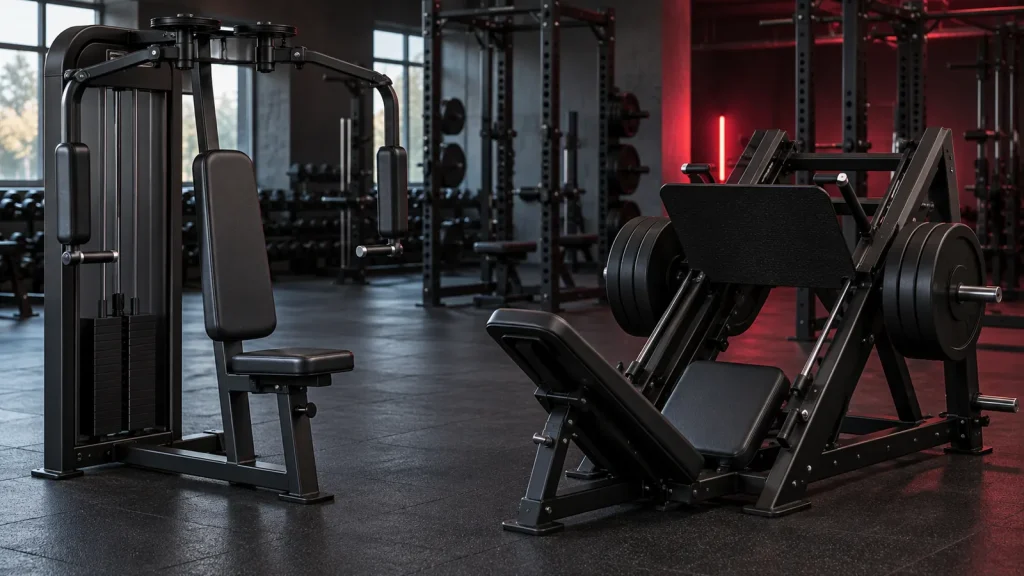
How Mike Mentzer Heavy Duty works
Heavy Duty is Mike Mentzer's version of high intensity training, or HIT. Arthur Jones, who built the Nautilus machines, came up with HIT first. Mentzer, who won the 1978 Mr. Universe with a perfect score, refined it and gave it a name. His own formula, as Iron Man magazine reported it, was brief, intense and infrequent training.
Each exercise gets one working set taken to momentary muscular failure, the point where you cannot finish another strict rep. Warm-up sets come first and stay well short of failure. Some exercises run in pairs with no rest between them: an isolation move first, then a compound press for the same muscle, so the target muscle is already tired when the press starts. This is the pre-exhaust method.
The routine on this page follows a 1995 phone consultation described on mikementzer.org, which calls itself the official Mike Mentzer site. Workout 1 is chest and back: flyes or pec deck straight into close-grip incline presses, then palms-up pulldowns, rows and shrugs. Workout 2 is shoulders and arms: lateral raises, rear delt work, barbell curls, pushdowns and dips. Iron Man and StrengthLog both describe running the pushdowns straight into the dips. Workout 3 is legs: leg extensions straight into leg presses, then leg curls and standing calf raises. That is 14 working sets across the three workouts.
In that consultation Mentzer recommends a workout about every 72 hours and never more often than every 48 hours, so each workout comes round roughly every nine days. Our sample schedule uses Monday and Thursday, which gives 72 hours, then 96. Another article on the official site says your logbook decides the gap, and that some people need as long as 10 days.
For reps, choose a weight you can lift for about 6 to 10 strict reps, and add weight once you get more than 10. Leg presses can go higher. StrengthLog gives 6 to 10 reps for upper body and 12 to 20 for lower body. Our in-app days use 8 reps for upper body and 12 to 15 for legs. We picked those counts inside the ranges. Mentzer did not set them.
Mentzer changed the routine over his career. A 2003 Iron Man article by John Little describes an earlier split of four to five sets per body part, trained every other day. Liftosaur describes a Consolidated Routine, which it calls Mentzer's fallback, with even less work done every 7 to 10 days. This page covers the 1995 three-workout version only.
Which to pick: choose Heavy Duty over German Volume Training or a bro split if high volume leaves you flat, you have little gym time, or you want to find the least work you can grow on. DC Training is the other low-volume option on this site, but it trains each muscle more often with rest-pause sets and suits lifters with several years behind them. Choose a higher-volume plan if you enjoy longer sessions or cannot honestly train to failure. Beginners should learn the lifts on a beginner program such as Starting Strength first. Mentzer said he would not take an absolute beginner to failure.
This is a summary in our own words of publicly described structure. Mentzer's books, sold together as Heavy Duty: Legacy Edition on mikementzer.org, hold the full system and his reasoning. The in-app templates are our simplified version.

The schedule
Train on Monday, Thursday, or any other days with rest between. Every set uses the same weight, the one you can lift for the written reps.
Workout 1: Chest and back
| Lift | Sets and reps |
|---|---|
| Dumbbell fly or pec deck, straight into the incline press | 1 x 8 |
| Incline bench press, close grip | 1 x 8 |
| Lat pulldown, close grip, palms up | 1 x 8 |
| Barbell row | 1 x 8 |
| Barbell shrug | 1 x 8 |
Workout 2: Shoulders and arms
| Lift | Sets and reps |
|---|---|
| Lateral raise | 1 x 8 |
| Rear delt fly | 1 x 8 |
| Barbell curl | 1 x 8 |
| Triceps pushdown, straight into dips | 1 x 8 |
| Dip | 1 x 8 |
Workout 3: Legs
| Lift | Sets and reps |
|---|---|
| Leg extension, straight into the leg press | 1 x 12 |
| Leg press | 1 x 15 |
| Leg curl | 1 x 12 |
| Standing calf raise | 1 x 15 |
Week pattern: CB-SA / LG-CB / SA-LG, repeating.
Progression and stall rules
Reps first, then weight
Pick a weight you can lift for about 6 to 10 strict reps and take the set to failure. When you get more than 10, add weight next time, as the 1995 consultation on mikementzer.org describes. StrengthLog puts that jump at 10 to 20%. The spreadsheet adds a small fixed amount per session instead. That is our simplification, so move to the next row only when you beat the top of your range.
Keep a progress chart
Mentzer told his client to keep an accurate progress chart. Write down the date, the weight, the strict reps, any machine settings and the days since you last did the workout. Judge recovery from the chart instead of the calendar.
Stalled? Rest longer first
Mentzer met a stall with more recovery before anything else. Liftosaur's version adds an extra rest day after 2 to 3 sessions with no gain. The sheet's note about taking 10% off the bar is our generic fallback and not part of Heavy Duty. Try more rest before you cut the weight.
No fixed length
Heavy Duty has no set block length. Liftosaur suggests running it 8 to 12 weeks before you reassess. Keep going while each workout beats the last one in your log.
Weekly volume
Work sets per lift, counted from the schedule above (warm-ups not included).
| Lift | Week 1 | Week 2 | Week 3 |
|---|---|---|---|
| Dumbbell fly or pec deck, straight into the incline press | 1 | 1 | 0 |
| Incline bench press, close grip | 1 | 1 | 0 |
| Lat pulldown, close grip, palms up | 1 | 1 | 0 |
| Barbell row | 1 | 1 | 0 |
| Barbell shrug | 1 | 1 | 0 |
| Lateral raise | 1 | 0 | 1 |
| Rear delt fly | 1 | 0 | 1 |
| Barbell curl | 1 | 0 | 1 |
| Triceps pushdown, straight into dips | 1 | 0 | 1 |
| Dip | 1 | 0 | 1 |
| Leg extension, straight into the leg press | 0 | 1 | 1 |
| Leg press | 0 | 1 | 1 |
| Leg curl | 0 | 1 | 1 |
| Standing calf raise | 0 | 1 | 1 |
Who it suits
A good fit
- Trained lifters past the beginner stage who stall or feel run down on high-volume programs.
- People short on time. Each workout is four or five working sets plus warm-ups.
- Lifters who keep a detailed log and will judge recovery from it rather than from the calendar.
Look elsewhere if
- Beginners. Learn the lifts first. Mentzer did not take absolute beginners to failure.
- Anyone who cannot or will not push a set to true failure. A single set that stops early does very little.
- Powerlifters. This routine has no squat, bench press or deadlift and no heavy low-rep work.
- People who like to train most days of the week.
Common mistakes
Turning warm-ups into work sets
Warm-ups prepare the joints and rehearse the movement. Push them hard and the one set that counts starts tired. Keep them light.
Stopping short of failure
The set ends when another strict rep is impossible. Stopping two reps early with only one set leaves little stimulus behind.
Forced reps and negatives on every set
Mentzer once had clients do them on every set and found that almost nobody gained well. StrengthLog's summary says to use them only occasionally.
Cheating reps to beat the log
Bouncing or heaving a weight up adds a number to the log without adding strength. Count strict reps only.
Adding sets when progress stalls
Mentzer's first fix for a stall was extra rest. Check sleep and food, then add a day between workouts before you add anything else.
Your sample week
For each lift, enter: Weight you reach failure with at the written reps, in strict form. The weights below update as you type. Your numbers stay in your browser and are not saved. The numbers shown are an example lifter.
Workout 1: Chest and back
| Set | Reps | Weight (lb) |
|---|---|---|
| 1 | 8 | 25 |
| Set | Reps | Weight (lb) |
|---|---|---|
| 1 | 8 | 115 |
| Set | Reps | Weight (lb) |
|---|---|---|
| 1 | 8 | 110 |
| Set | Reps | Weight (lb) |
|---|---|---|
| 1 | 8 | 135 |
| Set | Reps | Weight (lb) |
|---|---|---|
| 1 | 8 | 185 |
Workout 2: Shoulders and arms
| Set | Reps | Weight (lb) |
|---|---|---|
| 1 | 8 | 20 |
| Set | Reps | Weight (lb) |
|---|---|---|
| 1 | 8 | 15 |
| Set | Reps | Weight (lb) |
|---|---|---|
| 1 | 8 | 65 |
| Set | Reps | Weight (lb) |
|---|---|---|
| 1 | 8 | 60 |
| Set | Reps | Weight (lb) |
|---|---|---|
| 1 | 8 | 10 |
Workout 3: Legs
| Set | Reps | Weight (lb) |
|---|---|---|
| 1 | 12 | 100 |
| Set | Reps | Weight (lb) |
|---|---|---|
| 1 | 15 | 270 |
| Set | Reps | Weight (lb) |
|---|---|---|
| 1 | 12 | 80 |
| Set | Reps | Weight (lb) |
|---|---|---|
| 1 | 15 | 135 |
The spreadsheet
The file has three sheets: your numbers, the full week with every weight as a formula, and a progress table that carries the weights forward. It opens in Excel, Numbers and LibreOffice. The weights in the link below use the numbers you typed above.
Open it in Google Sheets
- Download the .xlsx file above.
- Go to Google Drive and choose New, then File upload, and pick the file.
- Double-click the uploaded file and choose Open with Google Sheets.
- Choose File, then Save as Google Sheets so you can edit it.
Want the weights to follow you into the gym? Create a free account and the program loads into Train for you.
How it compares
Mike Mentzer Heavy Duty vs German Volume Training
GVT runs 10 sets of 10 on one lift per muscle, three days a week. Heavy Duty uses one set per exercise and far more rest. Pick GVT for a short, hard volume block if you recover well. Pick Heavy Duty if high volume leaves you flat or you have little time. Read the German Volume Training guide.
Mike Mentzer Heavy Duty vs Bro split
A bro split trains one muscle group a day over five days, with several sets per exercise. Heavy Duty covers the body in three short workouts, about two a week. Pick the bro split if you enjoy daily sessions and recover well. Pick Heavy Duty if you want fewer, shorter workouts. Read the Bro split guide.
Mike Mentzer Heavy Duty vs DC Training
DC is the other low-volume system here: one rest-pause set per body part, each muscle three times every two weeks, three days a week, run in blasts with cruise breaks. Heavy Duty uses one straight set to failure per exercise and repeats each workout about every nine days. Pick DC if you have three or more hard years behind you and recover fast; pick Heavy Duty if you want fewer sessions and simpler sets. Read the DC Training guide.
Mike Mentzer Heavy Duty vs Full body workout routine
Trains the whole body three times a week with heavy, medium and volume days and several sets per lift. Pick it if you want strength on the big barbell lifts and like training often. Pick Heavy Duty if you would rather train twice a week with one hard set per exercise. Read the Full body workout routine guide.
Mike Mentzer Heavy Duty vs Starting Strength
A beginner plan of two alternating full body workouts with weight added every session. Run it first if you are new to lifting. Mentzer said he would not take an absolute beginner to failure, so Heavy Duty fits once you know the lifts. Read the Starting Strength guide.
Load Mike Mentzer Heavy Duty into Train and log each session against the plan.
Start it in Symmetric StrengthThe workouts in Train show one working set per exercise at a fixed rep count: 8 for upper body, 12 to 15 for legs. Heavy Duty works from a rep range and a logbook, so treat the number as a target inside the range.
Common questions
What is Mike Mentzer's Heavy Duty?
A high intensity training method by bodybuilder Mike Mentzer: one working set per exercise taken to failure, few exercises, and several days of rest between workouts. He built it on Arthur Jones's HIT ideas.
How many sets per exercise does Heavy Duty use?
One working set after light warm-ups. In the 1995 routine described on mikementzer.org, that adds up to 14 working sets across three workouts.
How often should you train on Heavy Duty?
In the 1995 consultation, about every 72 hours and no more often than every 48. Another article on the official site says recovery sets the gap: for some people every 3 days, for others every 10.
Is Heavy Duty the same as high intensity training?
It is one version of it. Arthur Jones developed HIT. Mentzer refined it, cut the volume further over the years and published it under the Heavy Duty name.
What is the Consolidated Routine?
A shorter fallback that Liftosaur describes: two workouts of two or three compound lifts, with 7 to 10 days between workouts. Liftosaur's own pages disagree on the exact lifts, so we left it out of the app.
Can beginners do Heavy Duty?
Mentzer said he would not take an absolute beginner to failure. Learn the lifts on a beginner program first, then try it.
Is Heavy Duty free?
The books are paid. mikementzer.org sells Heavy Duty: Legacy Edition, which combines Heavy Duty (1993) and Heavy Duty II: Mind and Body (1996). It sells an online course separately. This guide and the spreadsheet are free and summarize the method in our own words.
Know where you stand
Before you start, check how your lifts compare on the strength standards, estimate a max with the one-rep max calculator, or score your total with the DOTS calculator.
Sources and credit
Heavy Duty was created by Mike Mentzer (1951 to 2001). His books and course are sold at mikementzer.org, which describes itself as the official Mike Mentzer site. This guide summarizes publicly described structure in our own words, drawing on that site's free articles, StrengthLog, Iron Man magazine and Liftosaur. Buy the books for the full method. The in-app templates are our own simplified version.
- Official Mike Mentzer Heavy Duty source
- Mike Mentzer's Ideal Routine for Natural Bodybuilders: his 1995 Heavy Duty blueprint (John Little, mikementzer.org)
- How Often Should You Train? (John Little, mikementzer.org)
- Mike Mentzer's High-Intensity Training Formula: Intense, Brief and Infrequent (John Little, mikementzer.org)
- Heavy Duty: Legacy Edition (official book, mikementzer.org)
- Mike Mentzer workout routine: Heavy Duty bodybuilding (StrengthLog)
- Heavy Duty: Mike Mentzer's most productive routine (John Little, Iron Man magazine, 2003)
- Mike Mentzer Heavy Duty (Liftosaur)
- Mike Mentzer Consolidated (Liftosaur)
Checked . Symmetric Strength is not affiliated with Mike Mentzer's estate, John Little, HIT Universal Limited, StrengthLog, Liftosaur or Iron Man magazine. Program names are used only to identify the programs.