DC Training (DoggCrapp) guide and free spreadsheet
Advanced · 3 days a week · 6 to 8 week blasts, each followed by a 10 to 14 day cruise · A two-way split, three days a week, with one rest-pause set per body part
Dante Trudel's low-volume bodybuilding system for lifters with three or more hard years behind them: one all-out set per body part, each muscle trained three times every two weeks.
Free. The spreadsheet needs no account.
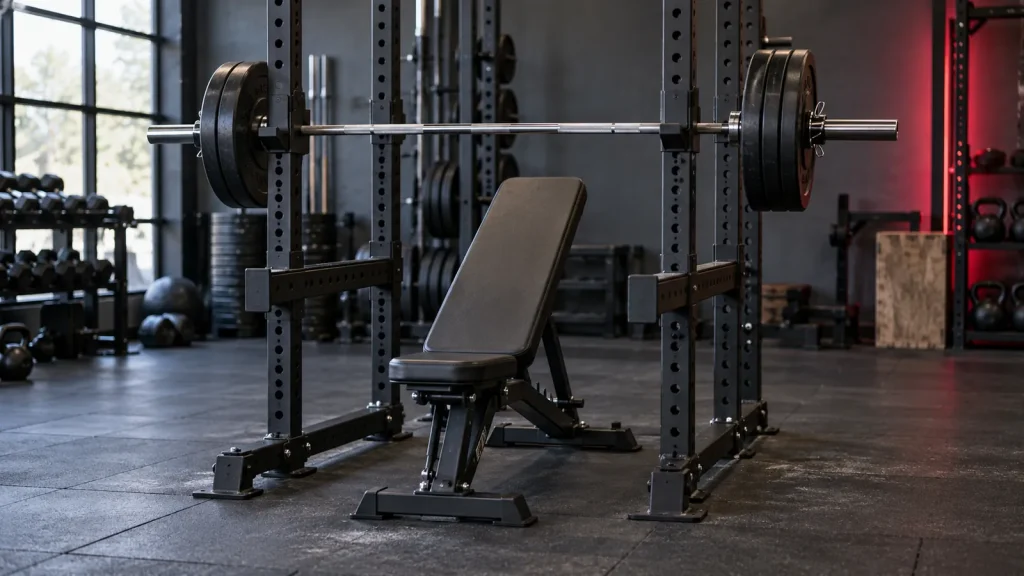
How DC Training (DoggCrapp) works
DC training, short for DoggCrapp, is a bodybuilding system created by Dante Trudel. The Barbell, which interviewed him in 2024, dates the system to over three decades ago. It spread after he posted his ideas on an internet chat board in 2000. Liftosaur traces the main write-up to the Cycles for Pennies thread on IntenseMuscle.com.
The week is a two-way split. Workout A trains chest, shoulders, triceps, back width and back thickness. Workout B trains biceps, forearms, calves, hamstrings and quads. You train Monday, Wednesday and Friday and alternate, so week one is A, B, A and week two is B, A, B. Each body part gets three sessions every 14 days. Trudel's point is frequency: he counts 78 chest sessions a year this way against 52 on a once-a-week split.
Each body part gets one working set, and most are rest-pause sets. You go to failure, rack the weight, take 15 deep breaths, go to failure again, breathe, then do a last push to failure. Trudel puts most sets at 11 to 15 total reps, with some body parts going to 15 to 20 or more. The Barbell's DC guide gives triceps and hamstrings 15 to 30, and Liftosaur sets 20 as the target for triceps, biceps and hamstrings.
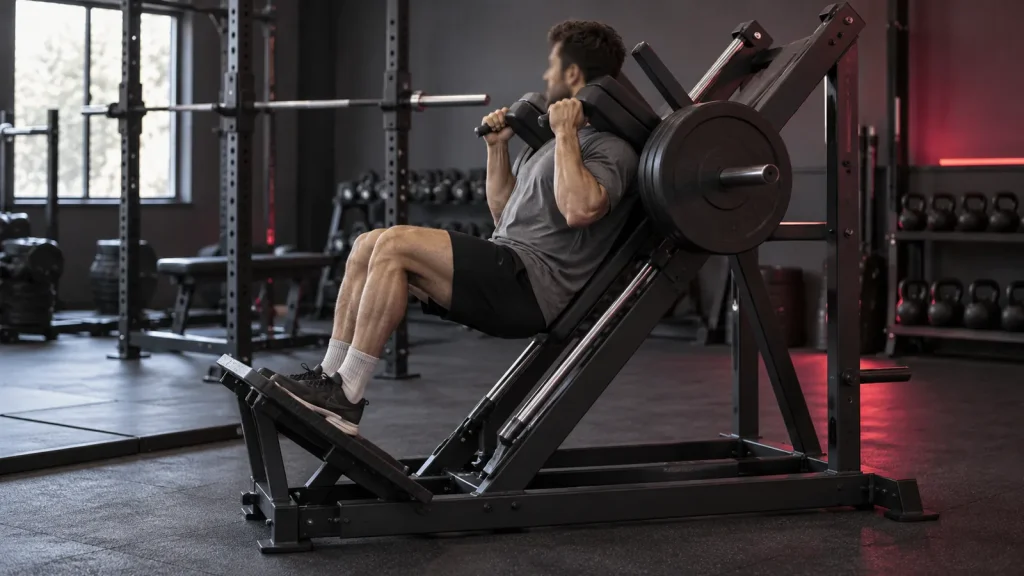
Quads and back thickness are the exceptions, because rest-pausing a heavy squat or row is a safety risk. For quads you do a heavy set of 4 to 8 reps, rest, then a set of about 20 with a lighter but still heavy weight. Trudel calls that second set a widowmaker. For back thickness you do a heavy set of 6 to 8, rest, then a slightly lighter set of 10 to 12, both to failure. Calves get one slow set with a long pause in the stretch on every rep: Liftosaur gives 10 to 12 reps with a 10 to 15 second hold, JC Deen 12 to 20. Forearms are not rest-paused either: one straight set to failure, 15 to 20 reps in Liftosaur and 10 to 30 in The Barbell's guide.
After the working set for each body part except calves comes an extreme stretch: a deep, loaded stretch held for 60 to 90 seconds. Trudel describes these as very painful. Liftosaur's chest example is holding heavy dumbbells at the bottom of a fly.
You pick the three best exercises you can rest-pause for each body part and use one per session, so a given exercise comes back every two weeks. You log every working set and try to beat it next time. When you cannot, that exercise is swapped out. Blasts of six to eight weeks alternate with 10 to 14 day cruises of easy maintenance training.
Our version: the in-app templates and the sheet hold one rotation, with exercises we picked: incline bench, overhead press, close-grip bench, lat pulldown and barbell row on A, then barbell curl, hammer curl, calf raise, leg curl and squat on B. Add your own second and third exercise per body part to follow the full rotation. Rest-pause sets aim for 15 total reps, or 20 on close-grip bench and leg curl. Barbell curls stay at 15, inside The Barbell's 11 to 15 for biceps. The back-off weights in the sheet come from Liftosaur's starting guide: 85% of your heavy row (it gives 85 to 90%) and 65% of your heavy squat for the widowmaker (it gives 60 to 70%). Adjust them after the first session.
To log a rest-pause set in the app, enter it as one set: the weight, and the total reps from all three mini-sets. A set of 8, then 4, then 2 is logged as 14.
Which one to pick: choose DC if you have at least three years of hard training, want short sessions and can push one set to true failure. Choose a bro split if you are earlier on and like a day per muscle with several straight sets. Choose PHAT if you can train five days and want separate power and size days. Choose German Volume Training if you want a short, very high volume block on a few lifts.
The schedule
Train on Monday, Wednesday, Friday, or any other days with rest between. Every set uses the same weight, the one you can lift for the written reps.
Workout A: chest, shoulders, triceps, back
| Lift | Sets and reps |
|---|---|
| Incline bench press, rest-pause | 1 x 15 |
| Overhead press, rest-pause | 1 x 15 |
| Close-grip bench press, rest-pause | 1 x 20 |
| Lat pulldown, rest-pause | 1 x 15 |
| Barbell row, heavy set then back-off set | 1 x 8, 1 x 12 |
Workout B: biceps, forearms, calves, hamstrings, quads
| Lift | Sets and reps |
|---|---|
| Barbell curl, rest-pause | 1 x 15 |
| Hammer curl, one straight set to failure | 1 x 20 |
| Calf raise, slow with a pause in the stretch | 1 x 12 |
| Leg curl, rest-pause | 1 x 20 |
| Squat, heavy set then widowmaker | 1 x 8, 1 x 20 |
Week pattern: A-B-A / B-A-B, repeating.
Progression and stall rules
Beat the logbook every session
Trudel's rule is to write down the weight and reps of every working set, warm-ups excluded, and beat the last entry for that exercise with more weight, more reps or both. The Progress tab in our sheet adds the jump every time you repeat a lift. Treat that as the most you add: take the jump once the set reaches its target (15 total reps, or 20 on close-grip bench, leg curl and hammer curl) and otherwise keep the weight and add reps. The 5 lb jumps, and 10 lb on the heavy squat set, follow Liftosaur; the kg jumps are ours.
One rest-pause set, three failure points
Take the weight to failure, rack it, take 15 deep breaths, go to failure again, rest the same way, then finish. Trudel puts most sets at 11 to 15 total reps, with some body parts higher. His incline press example is about 8 reps, then 2 to 4, then 1 or 2.
Fail to beat it, change the exercise
In Trudel's system, you drop an exercise you cannot beat and bring in a new one for that body part. The sheet's note about taking 10% off after three misses is our generic default. Our advice for DC: use that 10% drop only when you come back to a lift after a cruise.
Blast, then cruise
Trudel has you train all out for about six to eight weeks, then cruise for 10 to 14 days of maintenance training with two or three gym visits. The Barbell and Liftosaur add that cruise sets are straight sets, not taken to failure. Then start the next blast. Liftosaur and JC Deen give blasts of up to 12 weeks.
Weekly volume
Work sets per lift, counted from the schedule above (warm-ups not included).
| Lift | Week 1 | Week 2 |
|---|---|---|
| Incline bench press, rest-pause | 2 | 1 |
| Overhead press, rest-pause | 2 | 1 |
| Close-grip bench press, rest-pause | 2 | 1 |
| Lat pulldown, rest-pause | 2 | 1 |
| Barbell row, heavy set then back-off set | 4 | 2 |
| Barbell curl, rest-pause | 1 | 2 |
| Hammer curl, one straight set to failure | 1 | 2 |
| Calf raise, slow with a pause in the stretch | 1 | 2 |
| Leg curl, rest-pause | 1 | 2 |
| Squat, heavy set then widowmaker | 2 | 4 |
Who it suits
A good fit
- Experienced bodybuilders with at least three years of serious training, the bar Trudel sets himself.
- Lifters who want short sessions and do well on low volume with very high effort.
- People coming off a once-a-week bro split who want each muscle trained more often without adding gym days.
Look elsewhere if
- Beginners and early intermediates. A simple linear program builds the base that DC assumes.
- Anyone who cannot train to true failure safely, for example without a rack or a spotter on pressing.
- Powerlifters peaking for a meet. DC is built for muscle size, and it rotates exercises rather than practising the competition lifts.
Common mistakes
Rest-pausing squats and rows
Trudel keeps quads and back thickness on straight sets for safety. Use the heavy set and the back-off set or widowmaker instead.
Adding extra sets
DC asks you to take one set per body part to true failure. Extra sets eat into the recovery that lets you train each muscle three times in two weeks.
Training without a logbook
The system runs on beating your last entry. If you do not write down the weight and every mini-set, you cannot tell when to push or when to swap an exercise.
Skipping the cruise
Trudel ends each blast with a cruise. You use those 10 to 14 easy days to recover from weeks of sets to failure, and the next blast depends on that rest.
Stretching cold and too hard
The extreme stretch comes right after the working set for that body part, not before training. Our advice: ease into the position and hold it, rather than bouncing into it.
Your sample week
For each lift, enter: The weight you use for your one rest-pause set, the heavy set on squat and row, or the straight set on hammer curls and calves. The weights below update as you type. Your numbers stay in your browser and are not saved. The numbers shown are an example lifter.
Workout A: chest, shoulders, triceps, back
| Set | Reps | Weight (lb) |
|---|---|---|
| 1 | 15 | 155 |
| Set | Reps | Weight (lb) |
|---|---|---|
| 1 | 15 | 95 |
| Set | Reps | Weight (lb) |
|---|---|---|
| 1 | 20 | 135 |
| Set | Reps | Weight (lb) |
|---|---|---|
| 1 | 15 | 120 |
| Set | Reps | Weight (lb) |
|---|---|---|
| 1 | 8 | 165 |
| 2 | 12 | 140 |
Workout B: biceps, forearms, calves, hamstrings, quads
| Set | Reps | Weight (lb) |
|---|---|---|
| 1 | 15 | 65 |
| Set | Reps | Weight (lb) |
|---|---|---|
| 1 | 20 | 25 |
| Set | Reps | Weight (lb) |
|---|---|---|
| 1 | 12 | 135 |
| Set | Reps | Weight (lb) |
|---|---|---|
| 1 | 20 | 80 |
| Set | Reps | Weight (lb) |
|---|---|---|
| 1 | 8 | 225 |
| 2 | 20 | 145 |
The spreadsheet
The file has three sheets: your numbers, the full week with every weight as a formula, and a progress table that carries the weights forward. It opens in Excel, Numbers and LibreOffice. The weights in the link below use the numbers you typed above.
Open it in Google Sheets
- Download the .xlsx file above.
- Go to Google Drive and choose New, then File upload, and pick the file.
- Double-click the uploaded file and choose Open with Google Sheets.
- Choose File, then Save as Google Sheets so you can edit it.
Want the weights to follow you into the gym? Create a free account and the program loads into Train for you.
How it compares
DC Training (DoggCrapp) vs Bro split
A bro split gives each muscle its own day, once a week, with several straight sets. DC trains each muscle three times every two weeks with one rest-pause set. Pick the bro split if you are still building your base or like more exercises per muscle; pick DC if you have years of training behind you and want fewer, harder sets. Read the Bro split guide.
DC Training (DoggCrapp) vs PHAT
PHAT runs five days with two heavy power days and three size days. DC runs three days with one all-out set per body part. Pick PHAT if you can train five days and want strength work built in; pick DC if three days is your limit and size is the goal. Read the PHAT guide.
DC Training (DoggCrapp) vs German Volume Training
GVT gets its results from 10 sets of 10 on a couple of lifts. DC goes the other way, with one set per body part taken past failure. Pick GVT for a short high-volume block; pick DC if long sessions beat you up and you prefer intensity over volume. Read the German Volume Training guide.
Load DC Training (DoggCrapp) into Train and log each session against the plan.
Start it in Symmetric StrengthThe workouts in Train hold one exercise per body part and show each rest-pause set as 1 set of 15, or 20 on close-grip bench and leg curl. Log a rest-pause set as one set: the weight, and the total reps from all three mini-sets (8, then 4, then 2 is 14). The squat and row rows list the heavy set first and the back-off set second. Hammer curls are one straight set, not rest-paused. Trudel rotates three exercises per body part; Train carries one of them.
Common questions
What does DC training stand for?
DC is short for DoggCrapp, the name Dante Trudel's system goes by. It is a bodybuilding method built on rest-pause sets, a two-way split, extreme stretching and a strict logbook.
How many days a week is DC training?
Three, usually Monday, Wednesday and Friday, alternating Workout A and Workout B. Each body part is trained three times every two weeks. For highly advanced lifters, Trudel says he splits the body into three workouts and has them train four times a week.
What is a widowmaker in DC training?
A set of about 20 reps on squats, hack squats or leg press, done after your heavy set of 4 to 8. The weight is lighter than the heavy set but still heavy. Liftosaur adds that you do not rack the bar during it: breathe at the top between reps and keep going.
How do I do a DC rest-pause set?
Go to failure, rack the weight and take 15 deep breaths, go to failure again, take another 15 breaths, then a last push. Most sets total 11 to 15 reps. In the app, log it as one set with the total reps.
Is DC training good for beginners?
No. Trudel says it is not for anyone who has not trained hard for at least three years. A beginner gains faster on a simpler plan that adds weight every session.
Is DC training free?
Trudel first posted the system on a public forum in 2000, and The Barbell notes that those posts have been copied around the internet ever since. This guide is a summary in our own words with our own exercise picks, not an official version.
Do the in-app templates match this page?
They carry Workout A and Workout B with the same lifts, sets and reps as the sheet. They hold one exercise per body part, so add your own two others to follow Trudel's three-exercise rotation.
Know where you stand
Before you start, check how your lifts compare on the strength standards, estimate a max with the one-rep max calculator, or score your total with the DOTS calculator.
Sources and credit
DC training (DoggCrapp) was created by Dante Trudel, who first shared it on an internet forum in 2000. This guide describes the system in our own words from Trudel's interview with The Barbell, The Barbell's DC guide, Liftosaur and JC Deen. The exercise picks, the single rotation, the kg weight jumps and the in-app templates are our own simplified version.
- Dante Trudel interview: all about Doggcrapp (The Barbell, Greg Merritt, 2024)
- Doggcrapp training: everything you need to know (The Barbell, Greg Merritt)
- DoggCrapp (DC Training) program (Liftosaur)
- DoggCrapp training (JC Deen)
- The DOGG Pound, the DC training forum where Trudel posts as Doggcrapp (IntenseMuscle)
Checked . Symmetric Strength is not affiliated with Dante Trudel, IntenseMuscle, The Barbell, Liftosaur or JC Deen. Program names are used only to identify the programs.